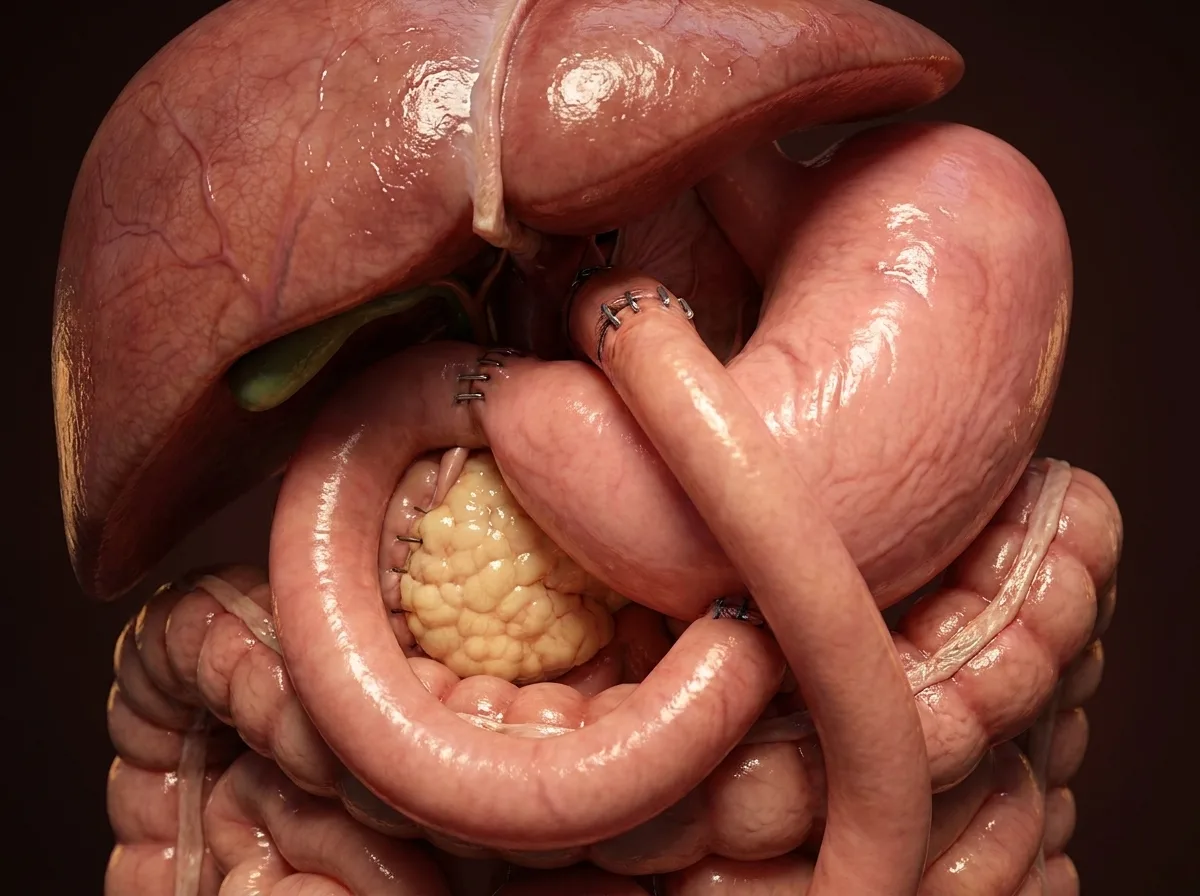
The Whipple procedure, known medically as pancreaticoduodenectomy, is one of the most complex operations in abdominal surgery. It is performed mainly to remove tumours in the head of the pancreas, the lower part of the bile duct, the ampulla of Vater, or the duodenum. For many patients with these conditions, it offers the only real chance of a cure.
Hearing that you or a loved one needs a Whipple operation can be frightening. This article explains, in plain language, why the surgery is done, what is removed, how the digestive system is rebuilt, what recovery looks like, and how you can prepare. Understanding the journey ahead helps you ask better questions and take an active part in your own care.
Understanding the Anatomy
The pancreas is a gland that sits deep in the upper abdomen, behind the stomach. It has two main jobs: it produces digestive enzymes that help break down food, and it produces hormones such as insulin that control blood sugar. The pancreas is divided into the head, neck, body, and tail. The head sits in the curve of the duodenum, the first part of the small intestine.
The common bile duct, which carries bile from the liver and gallbladder, passes through the head of the pancreas and joins the pancreatic duct before emptying into the duodenum at a small opening called the ampulla of Vater. Because so many important structures meet in this small area, a tumour in any one of them usually requires removal of all of them together. This is why the Whipple operation is so extensive.
Why Is a Whipple Procedure Performed?
The most common reasons for a Whipple procedure are:
Pancreatic cancer (adenocarcinoma) in the head of the pancreas
Ampullary cancer, arising at the ampulla of Vater
Distal cholangiocarcinoma, cancer of the lower common bile duct
Duodenal cancer
Pancreatic neuroendocrine tumours
Cystic tumours of the pancreas, such as IPMN or mucinous cystic lesions with worrying features
Chronic pancreatitis with severe pain or complications in the head of the pancreas, in selected cases
Severe trauma to the pancreas and duodenum, rarely
When cancer is found early and has not spread to distant organs or major blood vessels, surgical removal combined with chemotherapy gives the best chance of long-term survival.
Warning Signs That May Lead to Diagnosis
Tumours in this region often cause symptoms only when they press on the bile duct. Common warning signs include:
Yellowing of the eyes and skin (obstructive jaundice), often without pain
Dark, tea-coloured urine and pale, clay-coloured stools
Generalised itching
Unexplained weight loss and loss of appetite
Upper abdominal or back pain
New-onset diabetes in an older adult
Oily, foul-smelling stools that are difficult to flush
Painless jaundice in an adult should always be investigated promptly. Do not ignore it or treat it only with home remedies.
Tests Before Surgery
Before a Whipple operation, your surgical team needs to answer two questions: what is the disease, and can it be safely and completely removed? Common investigations include:
Pancreatic protocol CT scan: the key test to assess the tumour and its relationship to major blood vessels
MRI and MRCP: to look at the bile duct, pancreatic duct, and liver in detail
Endoscopic ultrasound (EUS), often with a needle biopsy
Blood tests, including liver function, CA 19-9 tumour marker, and nutritional status
ERCP with stent placement, in some patients, to relieve severe jaundice before surgery
Heart, lung, and kidney assessment to confirm fitness for major surgery
In some cases of pancreatic cancer, chemotherapy is given first (neoadjuvant therapy) to shrink the tumour and treat any microscopic spread before the operation.
What Is Removed During a Whipple Procedure?
In a standard Whipple operation, the surgeon removes:
The head of the pancreas
The duodenum (first part of the small intestine)
The gallbladder
The lower part of the common bile duct
Nearby lymph nodes, to check for cancer spread
Sometimes the lower part of the stomach (in the classic Whipple)
In the pylorus-preserving Whipple, the whole stomach and the pyloric valve are kept, which may help with eating after surgery. Your surgeon will choose the safest approach based on the location and extent of the tumour.
Surgical Reconstruction: Rebuilding the Digestive System
After removal, the remaining organs must be reconnected so that food, bile, and pancreatic juice can flow into the intestine again. Three key connections (anastomoses) are made using a loop of small intestine called the jejunum:
Pancreaticojejunostomy: the remaining pancreas is joined to the intestine so digestive enzymes can drain.
Hepaticojejunostomy: the bile duct is joined to the intestine so bile can flow.
Gastrojejunostomy or duodenojejunostomy: the stomach is joined to the intestine so food can pass.
The pancreatic connection is the most delicate part of the operation, because pancreatic tissue is soft and its juices are powerful. Careful technique at this step is one of the most important factors in a safe recovery.
How Long Does the Surgery Take?
A Whipple operation usually takes 5 to 8 hours, depending on the complexity of the tumour and the patient's anatomy. It is performed under general anaesthesia. In selected patients at specialised centres, laparoscopic or robotic approaches may be used, but open surgery remains the standard approach in most hospitals.
Risks and Possible Complications
Every major operation carries risk, and it is important to discuss these honestly with your surgeon. Possible complications after a Whipple procedure include:
Pancreatic fistula: leakage of pancreatic fluid from the pancreatic connection. This is the most common significant complication and is usually managed with drains, antibiotics, and nutritional support.
Delayed gastric emptying: the stomach is slow to start working again, causing nausea or vomiting. It usually improves with time.
Bleeding, either early or delayed
Infection of the wound or inside the abdomen
Bile leak from the bile duct connection
Chest infection, blood clots, and other general risks of major surgery
Outcomes are clearly better when the operation is performed by an experienced hepatobiliary and pancreatic surgeon with a dedicated team, including anaesthesia, intensive care, radiology, and nutrition support. In high-volume centres, the risk of death from the operation is low, generally under 5%.
Hospital Stay and Early Recovery
Most patients stay in hospital for about 7 to 14 days. The first one or two days may be spent in a high-dependency or intensive care unit. During this time, you can expect:
Pain relief through an epidural, a patient-controlled pump, or medicines
Abdominal drains to monitor for leaks
A urinary catheter and intravenous fluids
Gradual return to sips of water, liquids, and then soft food
Getting out of bed and walking from the first or second day, which reduces the risk of chest infection and blood clots
Regular blood tests and close monitoring of drain fluid
Recovery at Home
Full recovery takes time. Most people need 6 to 12 weeks before they feel close to normal. Some tips for the recovery period:
Walk a little more each day, but avoid heavy lifting for at least 6 weeks.
Expect tiredness. Rest when you need to and increase activity gradually.
Keep the wound clean and dry, and report redness, discharge, or fever.
Take all prescribed medicines, including enzyme capsules and blood thinners if advised.
Attend every follow-up appointment.
Diet and Nutrition After Surgery
Eating well is one of the most important parts of recovery. Because part of the pancreas and the digestive tract have been changed, your body handles food differently.
Eat small, frequent meals: five or six small meals a day instead of three large ones.
Choose protein-rich foods such as fish, eggs, chicken, lentils, and milk products to help healing.
Limit very oily, fried, and spicy food in the early weeks.
Drink enough fluids, but sip slowly rather than drinking large amounts with meals.
Take pancreatic enzyme capsules with meals if prescribed. They help digest fat and protein and prevent oily stools and weight loss.
Monitor your blood sugar. Some patients develop diabetes or find that existing diabetes becomes harder to control.
Weight loss in the first few months is common. A dietitian can help you regain strength and weight safely.
Long-Term Life After a Whipple Procedure
Most patients who recover well return to normal daily activities, work, and family life. Some long-term changes may include the need for enzyme supplements, closer blood sugar monitoring, and regular check-ups.
If the operation was done for cancer, the removed tissue is examined in the laboratory. Based on these results, your doctor may recommend chemotherapy after surgery (adjuvant therapy) to lower the risk of the cancer returning. Follow-up usually includes blood tests, tumour markers such as CA 19-9, and periodic scans.
When to Contact Your Surgical Team Urgently
After you go home, seek medical help immediately if you notice:
Fever above 100.4°F (38°C) or shivering
Increasing abdominal pain or swelling
Repeated vomiting or inability to keep fluids down
Yellowing of the eyes or skin
Bleeding, vomiting blood, or black stools
Redness, swelling, or discharge from the wound
Shortness of breath, chest pain, or a swollen, painful leg
How to Prepare for Your Operation
Good preparation can make a real difference to your recovery:
Stop smoking as early as possible.
Improve your nutrition. Eat well and take supplements if your doctor advises.
Stay active. Daily walking builds strength before surgery.
Control blood sugar and blood pressure.
Arrange family support for your hospital stay and the first weeks at home.
Write down your questions and bring them to your consultation.
Questions to Ask Your Surgeon
Is my tumour removable, and what do my scans show?
Will I need chemotherapy before or after surgery?
Will you perform a classic or pylorus-preserving Whipple?
What are the main risks in my case?
How long will I stay in hospital, and when can I return to work?
Will I need enzyme capsules or diabetes treatment afterwards?
Conclusion
The Whipple procedure is a major operation, but in experienced hands it is a safe and potentially life-saving treatment for tumours of the pancreas, bile duct, ampulla, and duodenum. Early diagnosis, careful preparation, expert surgery, and dedicated aftercare together give patients the best possible outcome.
If you or a family member has been diagnosed with a tumour in the pancreas or bile duct, or has unexplained jaundice, early consultation with a hepatobiliary and pancreatic surgeon is the most important step.
This article is for general information and does not replace a personal medical consultation. Every patient's condition is different. Please discuss your individual treatment plan with your surgeon.