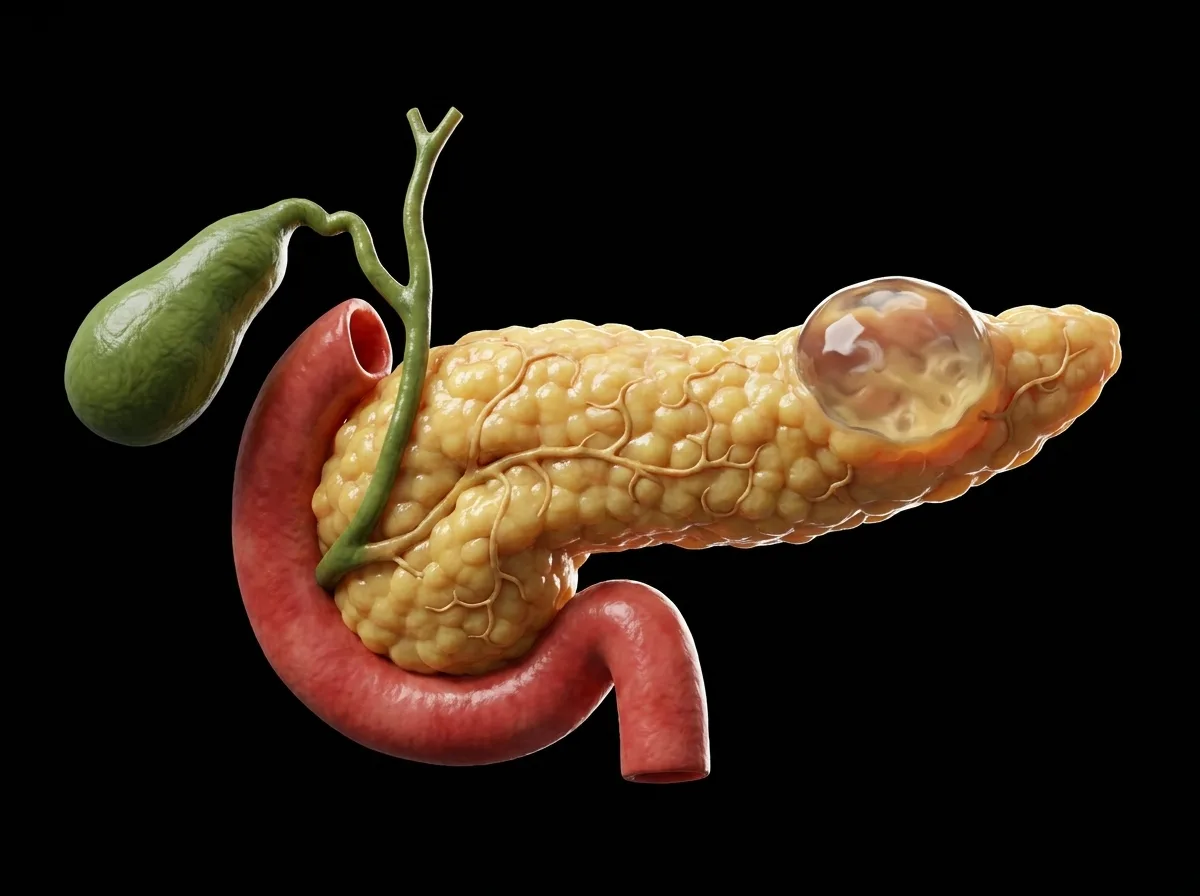
The pancreas is a small organ hidden deep in the abdomen, yet when it becomes inflamed or develops cysts, the effects can be severe and even life-threatening. Pancreatitis and pancreatic cysts are two related conditions that often confuse patients and families. Some cysts are harmless, while others need urgent treatment or carry a risk of cancer.
This article explains what pancreatitis is, why cysts develop, which symptoms to watch for, how these conditions are diagnosed, and when drainage or surgery becomes necessary.
What Does the Pancreas Do?
The pancreas lies behind the stomach and has two essential roles. It produces digestive enzymes that break down fat, protein, and carbohydrates in food, and it produces hormones, mainly insulin and glucagon, that control blood sugar. Normally, the digestive enzymes become active only after they reach the intestine. In pancreatitis, they become active too early, inside the pancreas itself, and begin to damage the organ.
Acute Pancreatitis
Acute pancreatitis is sudden inflammation of the pancreas. Most patients have a mild attack and recover within a week, but about one in five develop a severe form with tissue death (necrosis), infection, or failure of other organs.
Common Causes
Gallstones: the most common cause in Bangladesh and many parts of the world. A small stone blocks the opening shared by the bile and pancreatic ducts.
Alcohol
Very high blood triglycerides (fats)
Certain medicines
A complication after ERCP
Abdominal injury
High blood calcium, infections, and genetic or anatomical factors
Symptoms
Sudden, severe pain in the upper abdomen, often spreading to the back
Pain that worsens after eating and eases a little when leaning forward
Nausea and repeated vomiting
Fever and a fast heart rate
A swollen, tender abdomen
In severe cases: breathlessness, low blood pressure, and reduced urine
Acute pancreatitis is a medical emergency. Anyone with severe upper abdominal pain and vomiting should go to hospital immediately.
Chronic Pancreatitis
Chronic pancreatitis is long-term, ongoing inflammation that gradually scars and destroys the pancreas. In South Asia, a particular form called tropical pancreatitis affects young people and is often linked to pancreatic duct stones.
Symptoms
Recurrent or constant upper abdominal pain, often going through to the back
Oily, bulky, foul-smelling stools (steatorrhoea), caused by enzyme deficiency
Weight loss and malnutrition
Diabetes, as insulin-producing cells are destroyed
Chronic pancreatitis also increases the long-term risk of pancreatic cancer, so regular follow-up is important.
What Are Pancreatic Cysts?
A pancreatic cyst is a fluid-filled sac in or around the pancreas. With the wide use of CT and MRI scans, cysts are now found more often, sometimes by chance during scans done for other reasons. Broadly, they fall into two groups.
1. Pseudocysts
A pseudocyst is a collection of fluid that forms after an attack of acute pancreatitis or with chronic pancreatitis. It is not a true tumour and is not cancerous. Many small pseudocysts disappear on their own within weeks. Others grow large and cause problems.
After severe pancreatitis, a related collection called walled-off necrosis may form, containing dead pancreatic tissue as well as fluid. This often needs a different and more intensive treatment approach.
2. Cystic Neoplasms (True Cystic Tumours)
These are cysts lined by cells that can grow. Some are benign, and some can turn into cancer over time:
Serous cystadenoma: almost always benign
Mucinous cystic neoplasm (MCN): has the potential to become cancerous; usually found in women
Intraductal papillary mucinous neoplasm (IPMN): grows within the pancreatic ducts; risk depends on type and features
Solid pseudopapillary neoplasm (SPN): usually found in young women; low-grade but should be removed
Distinguishing a harmless cyst from a dangerous one is one of the most important tasks of a pancreatic specialist.
Symptoms of Pancreatic Cysts
Many cysts cause no symptoms at all. When symptoms appear, they may include:
A feeling of fullness or a lump in the upper abdomen
Abdominal pain or back pain
Early satiety, feeling full quickly after eating, and vomiting from pressure on the stomach
Jaundice, if the cyst presses on the bile duct
Weight loss
Fever, if a pseudocyst becomes infected
How Are These Conditions Diagnosed?
Blood tests: serum amylase and lipase, liver function, calcium, triglycerides, and sugar
Ultrasound: to look for gallstones
Contrast CT scan: to assess severity, necrosis, and collections
MRI and MRCP: to study cysts, ducts, and their connection in detail
Endoscopic ultrasound (EUS): gives close-up images and allows sampling of cyst fluid
Cyst fluid analysis: tests such as CEA and cytology help identify the type of cyst
Warning Features in a Pancreatic Cyst
Doctors look for "high-risk" or "worrisome" features suggesting that a cyst may be becoming cancerous:
Cyst size of 3 cm or more, or rapid growth
A solid component or thickened wall
A dilated main pancreatic duct
Jaundice caused by the cyst
Rising tumour marker CA 19-9
Suspicious cells on fluid analysis
Cysts with these features usually need surgical removal. Small, low-risk cysts can often be safely watched with periodic scans.
Treatment of Pancreatitis
Acute Pancreatitis
Hospital admission, intravenous fluids, and pain control
Early feeding by mouth or tube once tolerated, which helps recovery
Close monitoring; intensive care for severe cases
Antibiotics only when infection is present
Urgent ERCP if a stone is blocking the bile duct with infection (cholangitis)
Gallbladder removal after gallstone pancreatitis, ideally during the same admission for mild cases, to prevent another attack
Chronic Pancreatitis
Stopping alcohol and smoking completely
Pancreatic enzyme capsules with meals
Diabetes management
Pain management, sometimes with endoscopic stone removal or stenting
Surgery for persistent pain, duct stones, or complications. Operations such as Frey's procedure or lateral pancreaticojejunostomy drain the blocked duct and can provide long-lasting pain relief.
Surgical and Drainage Options for Cysts
Pseudocyst and Necrosis Drainage
Drainage is considered when a pseudocyst is large, persistent, painful, infected, or blocking the stomach or bile duct. Ideally, the cyst should have a mature wall, usually after about four weeks. Options include:
Endoscopic drainage: a stent is placed between the cyst and the stomach using EUS. This is now often the first choice.
Percutaneous drainage: a tube is placed through the skin under imaging guidance, especially in very sick patients.
Surgical drainage: cystogastrostomy or cystojejunostomy, connecting the cyst to the stomach or intestine. It can be done laparoscopically or by open surgery.
Necrosectomy: removal of infected dead tissue by endoscopic, minimally invasive, or surgical methods.
Removal of Cystic Tumours
Depending on where the cyst lies in the pancreas, the operation may be:
Whipple procedure for cysts in the head of the pancreas
Distal pancreatectomy, often with spleen preservation, for cysts in the body or tail. It can often be done laparoscopically.
Central pancreatectomy or enucleation for selected small lesions, to preserve healthy pancreas
Recovery After Pancreatic Surgery or Drainage
Recovery depends on the procedure. After endoscopic drainage, many patients go home within a few days, with a follow-up scan to check that the collection has resolved and the stent can be removed. After a drainage operation for chronic pancreatitis or removal of a cystic tumour, a hospital stay of about one to two weeks is typical, and full recovery takes six to eight weeks.
During recovery, patients may need temporary drains, enzyme supplements, and careful monitoring of blood sugar. A gradual return to normal food, early walking, and good nutrition all help healing. When the removed tissue is examined in the laboratory, the final report confirms the type of cyst and guides any further follow-up.
Common Myths About Pancreatic Disease
"Every pancreatic cyst is cancer." Most cysts are benign. The task is to identify the few that carry real risk.
"Pancreatitis only affects people who drink alcohol." In Bangladesh, gallstones are the more common cause, and many patients have never consumed alcohol.
"Once the pain settles, the problem is gone." If the cause, such as gallstones, is not treated, attacks often return and can be more severe.
"A cyst can be treated with medicine alone." No medicine dissolves a pancreatic cyst. Treatment is observation, drainage, or removal, depending on the type.
Possible Complications If Left Untreated
Infection of a pseudocyst or necrosis, causing sepsis
Rupture or bleeding into the cyst
Blockage of the stomach or bile duct
Progression of a mucinous cyst to cancer
Recurrent pancreatitis from untreated gallstones
Living with Pancreatic Disease
Avoid alcohol and tobacco completely.
Eat a balanced, low-fat diet with small, frequent meals.
Take enzyme capsules as prescribed, with every meal and snack.
Check blood sugar regularly.
Keep follow-up scans for any cyst under surveillance.
Safe food choices include rice, chapati, lentils, fish, chicken, egg whites, vegetables, and fruit. Reduce ghee, butter, deep-fried food, fast food, and very spicy dishes. Drink enough water, and see a dietitian if you are losing a lot of weight.
When to Seek Urgent Medical Care
Sudden severe upper abdominal pain, especially spreading to the back
Persistent vomiting
High fever with abdominal pain
Yellowing of the eyes or skin
Vomiting blood or passing black stools
Dizziness, fainting, or breathlessness
Conclusion
Pancreatitis and pancreatic cysts range from mild, self-limiting problems to serious conditions needing expert intervention. The key is accurate diagnosis: understanding the cause of pancreatitis, identifying the type of cyst, and recognising warning features early. With modern endoscopic, minimally invasive, and surgical options, most patients can be treated safely and effectively.
If you have had pancreatitis, recurrent upper abdominal pain, or a cyst found on a scan, consult a hepatobiliary and pancreatic surgeon for a clear plan.
This article is for general information and does not replace a personal medical consultation. Please discuss your individual treatment plan with your doctor.