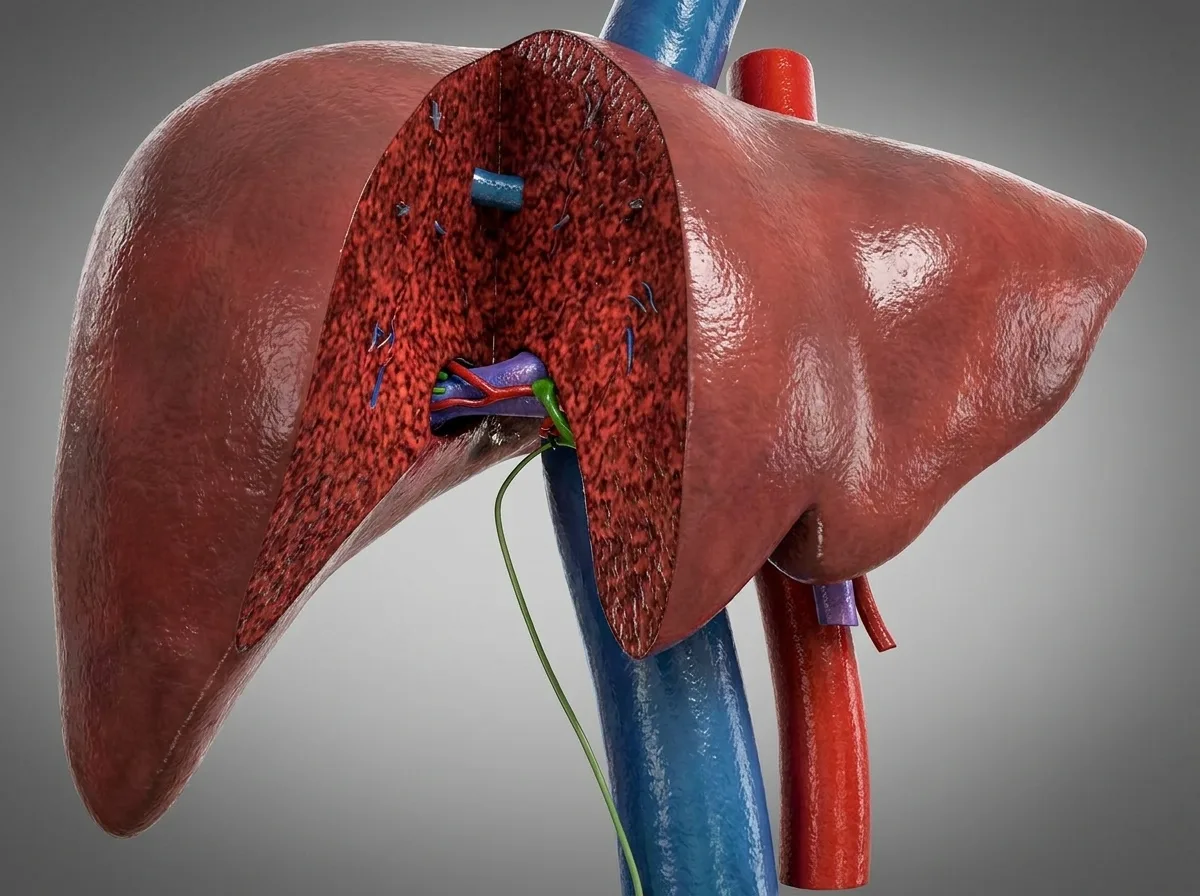
For patients with end-stage liver disease, a liver transplant can be the only treatment that offers a real chance of long-term survival. In many parts of the world, including South Asia, organs from deceased donors are scarce, so living-donor liver transplantation (LDLT) has become the main way of providing a new liver. In LDLT, a healthy person, usually a close family member, donates part of their liver to the patient.
This remarkable operation is possible because the liver can regenerate. Both the donor's remaining liver and the transplanted part grow back to near-normal size within weeks to months. This article explains who needs a transplant, who can donate, how both donor and recipient are evaluated, what the surgery involves, and what recovery and long-term life look like.
When Is a Liver Transplant Needed?
A transplant is considered when the liver has failed or is likely to fail, and no other treatment can restore health. Common reasons include:
Decompensated cirrhosis from hepatitis B, hepatitis C, fatty liver disease, alcohol, or autoimmune disease, with complications such as:
Fluid in the abdomen (ascites) that keeps returning
Bleeding from swollen veins in the food pipe (varices)
Confusion caused by liver failure (hepatic encephalopathy)
Persistent jaundice and muscle wasting
Hepatocellular carcinoma (HCC) within accepted transplant criteria, in a cirrhotic liver
Acute liver failure, such as from viral hepatitis or drug toxicity
Cholestatic liver diseases such as primary biliary cholangitis and primary sclerosing cholangitis
Childhood conditions such as biliary atresia and certain metabolic diseases
The severity of liver disease is often measured with the MELD score, which combines bilirubin, INR, creatinine, and sodium. Higher scores mean higher risk without a transplant.
Why Living Donation?
Shorter waiting time: the transplant can be planned before the patient becomes critically ill.
Planned surgery: both donor and recipient can be fully prepared.
High-quality graft: the liver comes from a healthy, carefully screened person, and the time outside the body is very short.
Availability: where deceased donation is limited, living donation saves lives that would otherwise be lost while waiting.
Who Can Be a Living Donor?
Donor safety is the highest priority in LDLT. A donor must be healthy, fully informed, and donating voluntarily. General requirements include:
Age usually between 18 and 55 years
A compatible blood group with the recipient
Good general health, without significant heart, lung, kidney, or liver disease
A healthy body weight, with little or no fat in the liver
No active infection, cancer, or uncontrolled diabetes or hypertension
A liver anatomy and size suitable for safe donation
A close relationship to the recipient, as permitted by national law. In Bangladesh, donation is regulated under the Human Organ Transplantation Act, which permits donation from defined close relatives.
Free and voluntary consent, with no financial reward or pressure
A donor can withdraw at any stage, and the team will protect the donor's confidentiality.
Donor Evaluation: A Step-by-Step Process
Potential donors go through a thorough, staged evaluation, usually over a few weeks:
Initial screening: blood group, basic blood tests, and medical history
Detailed blood tests: liver and kidney function, clotting, viral markers (hepatitis B and C, HIV), and tests for metabolic and clotting disorders
Imaging:
CT liver volumetry to measure the size of each part of the liver
CT angiography to map the blood vessels
MRCP to map the bile ducts
Assessment of liver fat by ultrasound, CT, MRI, or FibroScan
Heart and lung assessment: ECG, echocardiogram, and chest X-ray
Psychological and social assessment to confirm informed, voluntary donation
Liver biopsy, in selected cases, if fat or other disease is suspected
Legal and ethical approval according to national regulations
The surgical team must be confident that the donor will be left with enough healthy liver, usually at least 30 to 35% of the total volume, to stay safe after donation.
Recipient Evaluation
The recipient is assessed to confirm that a transplant is needed, that it is likely to succeed, and that there are no conditions that would make it unsafe:
Severity of liver disease and complications
Heart, lung, and kidney function
Scans of the liver and its blood vessels, including the portal vein
For HCC, staging to confirm the tumour is within transplant criteria
Screening for infections and cancers
Nutritional status and physical fitness
Dental check and vaccinations
Assessment of family support and the ability to take lifelong medicines
Complete abstinence from alcohol where relevant
The Transplant Surgery
The donor and recipient operations are carried out at the same time in two adjacent operating theatres by coordinated surgical teams.
The Donor Operation (Donor Hepatectomy)
For adult recipients, the right lobe (about 55 to 65% of the liver) is usually donated. Sometimes the left lobe is used.
For children, a smaller left lateral segment is usually enough.
The surgeon carefully divides the liver while preserving the blood vessels and bile ducts needed by both the donor and the graft.
The operation usually takes 6 to 8 hours.
The Recipient Operation
The diseased liver is removed.
The donor graft is placed and its blood vessels are connected: the hepatic veins, portal vein, and hepatic artery. The artery connection is often performed under microscope magnification.
The bile duct is connected, either to the recipient's own bile duct or to a loop of intestine.
The operation usually takes 10 to 14 hours.
Liver Regeneration
One of the most remarkable aspects of LDLT is how quickly the liver grows back. In both the donor and the recipient, the liver begins regenerating within days. Most of the volume is restored within 6 to 8 weeks, and near-normal size is reached within a few months. Liver function in healthy donors returns to normal.
Risks for the Donor
Donating part of the liver is major surgery. It is important to be honest about the risks:
Bile leak, the most common complication, which is usually manageable
Bleeding, infection, or wound problems
Temporary liver dysfunction
Blood clots and chest infection
Incisional hernia in the long term
A very small risk of death, reported at around 0.1 to 0.5% worldwide in experienced centres. This is why donor selection is so strict.
Risks for the Recipient
Rejection: the immune system attacks the new liver. Most episodes are treatable with medicine adjustment.
Infection, because of immunosuppressive medicines
Blood vessel complications, such as clotting of the hepatic artery or portal vein
Bile duct complications, such as leaks or narrowing
Small-for-size syndrome, if the graft is too small for the recipient's needs
Kidney problems, diabetes, or high blood pressure, partly from medicines
Recurrence of the original disease, such as HCC or hepatitis
In experienced centres, the one-year survival after LDLT is generally around 85 to 90% or higher.
Recovery for the Donor
A short stay in intensive care, usually one to two days
A hospital stay of about 7 to 10 days
Walking from the first or second day
Return to light activity within 4 to 6 weeks, and to most work within 6 to 12 weeks
Avoid heavy lifting and strenuous exercise for about 3 months
Regular follow-up, including liver tests and scans
Most donors return to a completely normal life, with no need for long-term medication.
Recovery for the Recipient
Intensive care monitoring for several days
A hospital stay of about 2 to 4 weeks
Frequent blood tests to monitor liver function and medicine levels
Close follow-up for the first few months, often staying near the transplant centre
Gradual return to normal activities over 3 to 6 months
Life After Transplant
Most liver transplant recipients go on to lead full and active lives. Long-term success depends on:
Taking immunosuppressive medicines (such as tacrolimus) every day, exactly as prescribed, for life
Never missing follow-up appointments and blood tests
Preventing infection: good hand hygiene, safe food and water, and appropriate vaccinations
Avoiding alcohol and tobacco completely
Maintaining a healthy weight, controlling blood sugar and blood pressure
Regular screening for skin and other cancers
Never taking herbal or over-the-counter medicines without consulting the transplant team
Many recipients return to work, travel, and family life. With careful planning, some women can even have successful pregnancies after transplant.
Emotional and Family Support
Living-donor transplantation affects the whole family. The donor and recipient are often parent and child, siblings, or spouses, and both are undergoing major surgery at the same time. Families need practical arrangements, financial planning, and emotional support. Open communication with the transplant team, counsellors, and other families who have been through the process can help greatly.
Why Early Planning Matters
Many families start thinking about a transplant only when the patient is already critically ill, when the risks of surgery are much higher. If liver disease is progressing, it is wise to speak with a transplant specialist early. This allows enough time for donor evaluation, financial preparation, and legal paperwork, and the patient can go into surgery in better condition.
Common Questions
Will the donor's liver work normally after donation?
Yes. In carefully selected donors, the remaining liver regenerates and works normally.
Can the donor have children afterwards?
Yes. Donation does not affect fertility, and many women donors have later had normal pregnancies.
Does the recipient need medicines for life?
Yes. Lifelong immunosuppression is needed to prevent rejection, although doses usually decrease over time.
Conclusion
Living-donor liver transplantation is one of the most complex achievements of modern surgery. It offers a second chance at life to patients with end-stage liver disease, made possible by the generosity of a healthy family member and the liver's remarkable ability to regenerate. Success depends on careful donor selection, meticulous surgery, a dedicated multidisciplinary team, and lifelong commitment from the recipient.
If you or a family member has advanced liver disease, or you are considering becoming a donor, consult a hepatobiliary and transplant surgeon to understand eligibility and the evaluation process.
This article is for general information and does not replace a personal medical consultation. Transplant decisions require individual assessment by a qualified transplant team.