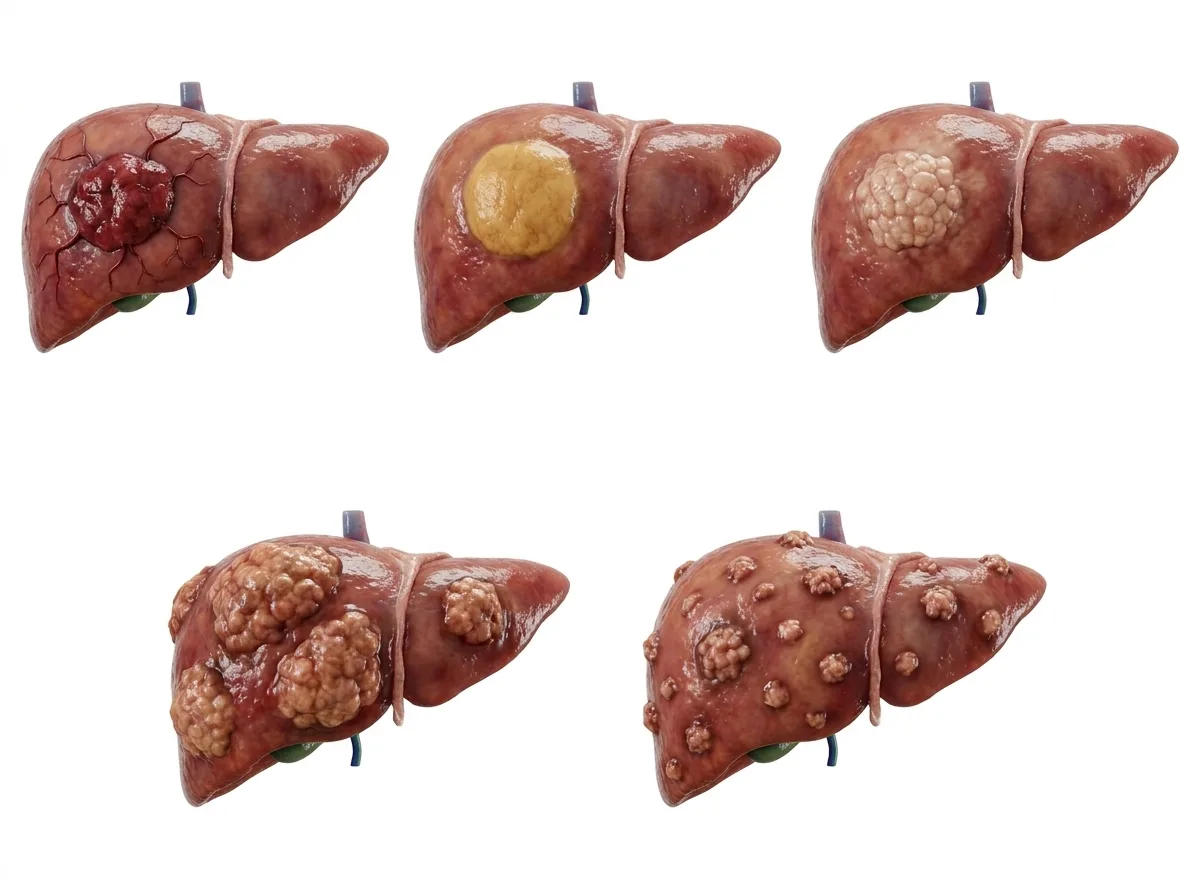
Liver cancer is one of the most serious cancers worldwide, and it is a growing concern in Bangladesh, where hepatitis B and C infections and fatty liver disease are common. The most frequent type of primary liver cancer is hepatocellular carcinoma (HCC), which arises from the main cells of the liver.
The most important message about HCC is this: when it is detected early, it can often be cured. Unfortunately, many patients are diagnosed late because early HCC usually causes no symptoms. This article explains who is at risk, how regular screening can catch the cancer early, how it is diagnosed and staged, and how surgical resection and other treatments can offer a chance of cure.
What Is Hepatocellular Carcinoma?
HCC is a cancer that starts in the hepatocytes, the cells that carry out most of the liver's work. Unlike cancers that spread to the liver from other organs (called secondary or metastatic liver cancer), HCC begins in the liver itself. In most patients, it develops in a liver that is already damaged by long-term disease, especially cirrhosis.
Who Is at Risk?
Most cases of HCC occur in people with known risk factors. This is why targeted screening works so well. The main risk factors are:
Chronic hepatitis B infection: the leading cause of HCC in Bangladesh and much of Asia. It can cause HCC even without cirrhosis.
Chronic hepatitis C infection
Cirrhosis from any cause
Fatty liver disease (MASLD/NAFLD), linked with obesity, diabetes, and high cholesterol. This is a rapidly increasing cause.
Alcohol use
Aflatoxin: a toxin produced by moulds on poorly stored grains and nuts
Diabetes and obesity
Smoking
A family history of HCC, particularly in families affected by hepatitis B
Rare inherited conditions such as haemochromatosis
Why Early Detection Matters
Early HCC is usually small, confined to the liver, and causes no symptoms. At this stage, curative treatments such as surgical resection, ablation, or transplantation are possible, and long-term survival is realistic. Once symptoms appear, the tumour is often large or has spread, and treatment options become limited.
Studies have consistently shown that patients whose HCC is found through regular screening are more likely to receive curative treatment and live longer than those diagnosed after symptoms appear.
Screening: Who Should Be Checked and How?
International guidelines recommend surveillance every 6 months for high-risk people, including:
All patients with cirrhosis, whatever the cause
People with chronic hepatitis B, especially men over 40, women over 50, those with a family history of HCC, and people of African origin
Selected patients with advanced liver fibrosis from hepatitis C or fatty liver disease
Screening is simple and affordable:
Ultrasound of the liver every 6 months
Serum alpha-fetoprotein (AFP) blood test, which is often combined with ultrasound
If anything suspicious is found, further tests are arranged promptly.
Symptoms of Liver Cancer
When symptoms do occur, they may include:
Pain or discomfort in the upper right abdomen
A lump or feeling of fullness under the right ribs
Unexplained weight loss and loss of appetite
Tiredness and weakness
Swelling of the abdomen (ascites)
Yellowing of the eyes and skin
Sudden worsening of known cirrhosis
Sudden severe pain and collapse, which can happen if the tumour bleeds
Anyone with liver disease who notices these symptoms should be assessed urgently.
How Is HCC Diagnosed?
A special feature of HCC is that it can often be diagnosed by its typical appearance on scans, without the need for a biopsy, in patients with cirrhosis.
Triple-phase contrast CT scan or contrast MRI of the liver: HCC shows a characteristic pattern, lighting up in the arterial phase and "washing out" in later phases.
AFP: often raised, but normal in a significant number of patients
Liver biopsy: needed when the scan appearance is not typical
Chest CT and sometimes bone scan or PET-CT: to check for spread
Hepatitis B and C tests, and an assessment of underlying liver disease
Assessing Liver Function: A Critical Step
In HCC, treatment depends not only on the tumour but also on how well the rest of the liver works. A large operation on a weak liver can lead to liver failure. Your team will assess:
Child-Pugh score, based on bilirubin, albumin, clotting, ascites, and confusion
Portal hypertension: raised pressure in the liver's blood supply, assessed through scans, platelet count, and endoscopy for varices
Future liver remnant: the volume of healthy liver that would remain after surgery, measured with CT volumetry
Performance status: your general fitness and daily activity level
These factors are combined in staging systems such as the Barcelona Clinic Liver Cancer (BCLC) system to guide the best treatment.
Curative Treatment Options
1. Surgical Resection (Hepatectomy)
Liver resection means surgically removing the part of the liver containing the tumour. It is one of the most effective curative treatments for HCC. It is best suited for patients with:
A single tumour, or a limited number of tumours, confined to one part of the liver
Good liver function (usually Child-Pugh A)
No significant portal hypertension
An adequate volume of remaining healthy liver
No spread outside the liver and no major blood vessel invasion
The liver has a remarkable ability to regenerate. In a healthy liver, up to about 70% can be removed safely, and the remaining liver grows back within weeks. In a cirrhotic liver, less can be removed, which is why careful assessment is essential.
Depending on the tumour, the operation may be a segmentectomy (removal of one segment), a sectionectomy, or a right or left hepatectomy (removal of one half of the liver). In selected patients, laparoscopic liver resection is possible and offers faster recovery.
When the remaining liver is expected to be too small, a procedure called portal vein embolisation may be done weeks beforehand to make the healthy part grow larger before surgery.
2. Liver Transplantation
For patients with early HCC and poor liver function from cirrhosis, transplantation treats both the cancer and the underlying liver disease. Eligibility is usually based on tumour size and number, such as the Milan criteria: one tumour up to 5 cm, or up to three tumours each up to 3 cm, without vascular invasion or spread.
3. Ablation
Small tumours, generally under 3 cm, can be destroyed with heat using radiofrequency ablation (RFA) or microwave ablation (MWA), through a needle placed under scan guidance. It is an excellent option for small tumours in patients who are not suitable for surgery.
Other Treatment Options
For more advanced disease, treatment aims to control the cancer, prolong life, and maintain quality of life:
TACE (transarterial chemoembolisation): chemotherapy delivered directly into the tumour's artery, then the artery is blocked
TARE/SIRT: radioactive beads delivered into the tumour's blood supply
Stereotactic radiotherapy for selected tumours
Systemic therapy: modern immunotherapy combinations and targeted medicines for advanced disease
Sometimes these treatments shrink a tumour enough to make surgery possible later.
Recovery After Liver Resection
A hospital stay of about 5 to 10 days, depending on the extent of surgery
Close monitoring of liver function, bleeding, and bile leak in the first days
Early walking and breathing exercises
Gradual return to normal diet, with good protein intake
Full recovery over 6 to 8 weeks
Follow-Up After Treatment
HCC can recur, either at the original site or elsewhere in the liver, because the underlying liver disease remains. Regular follow-up is essential:
CT or MRI scans and AFP every 3 months for the first two years, then less often
Continued treatment of hepatitis B or C with antiviral medicines
Management of fatty liver, diabetes, and weight
Complete avoidance of alcohol
When recurrence is detected early, it can often be treated again with resection, ablation, or other therapies.
Prevention: Reducing Your Risk
Hepatitis B vaccination, which is safe and highly effective. Make sure all family members are vaccinated.
Testing for hepatitis B and C, especially if you have had blood transfusions, surgery, or a family history
Antiviral treatment for chronic hepatitis B and C, which greatly reduces cancer risk
Maintaining a healthy weight and controlling diabetes
Avoiding alcohol and tobacco
Storing grains and nuts in dry conditions to avoid mould and aflatoxin
Regular screening if you are in a high-risk group
The Role of the Family
Treatment for liver cancer is an emotionally and financially demanding journey for both patients and families. Family members play a major role by bringing the patient to regular follow-up visits, making sure medicines are taken properly, ensuring good nutrition, and offering emotional support. Because hepatitis B can spread within families, the patient's spouse, children, and siblings should also be tested for hepatitis B and vaccinated if needed. At every stage, seek coordinated advice from the surgeon, oncologist, and hepatologist, and never hesitate to ask questions.
Common Myths
"Liver cancer cannot be cured." Early HCC can often be cured with surgery, ablation, or transplantation.
"If my liver tests are normal, I cannot have liver cancer." Liver function tests can be normal in early HCC; that is why screening uses ultrasound and AFP.
"Hepatitis B carriers do not need follow-up if they feel well." Carriers can develop HCC without symptoms and need regular monitoring.
Conclusion
Hepatocellular carcinoma is a serious disease, but it is not a hopeless one. Most cases arise in people with known risk factors such as hepatitis B, hepatitis C, cirrhosis, and fatty liver, so regular six-monthly screening can catch the cancer early, when curative surgery and other treatments are possible. Decisions about resection require careful assessment of both the tumour and the liver, and should be made by an experienced hepatobiliary team.
If you have hepatitis B or C, cirrhosis, or a liver lesion found on a scan, consult a hepatobiliary surgeon for a clear assessment and plan.
This article is for general information and does not replace a personal medical consultation. Please discuss your individual treatment plan with your doctor.