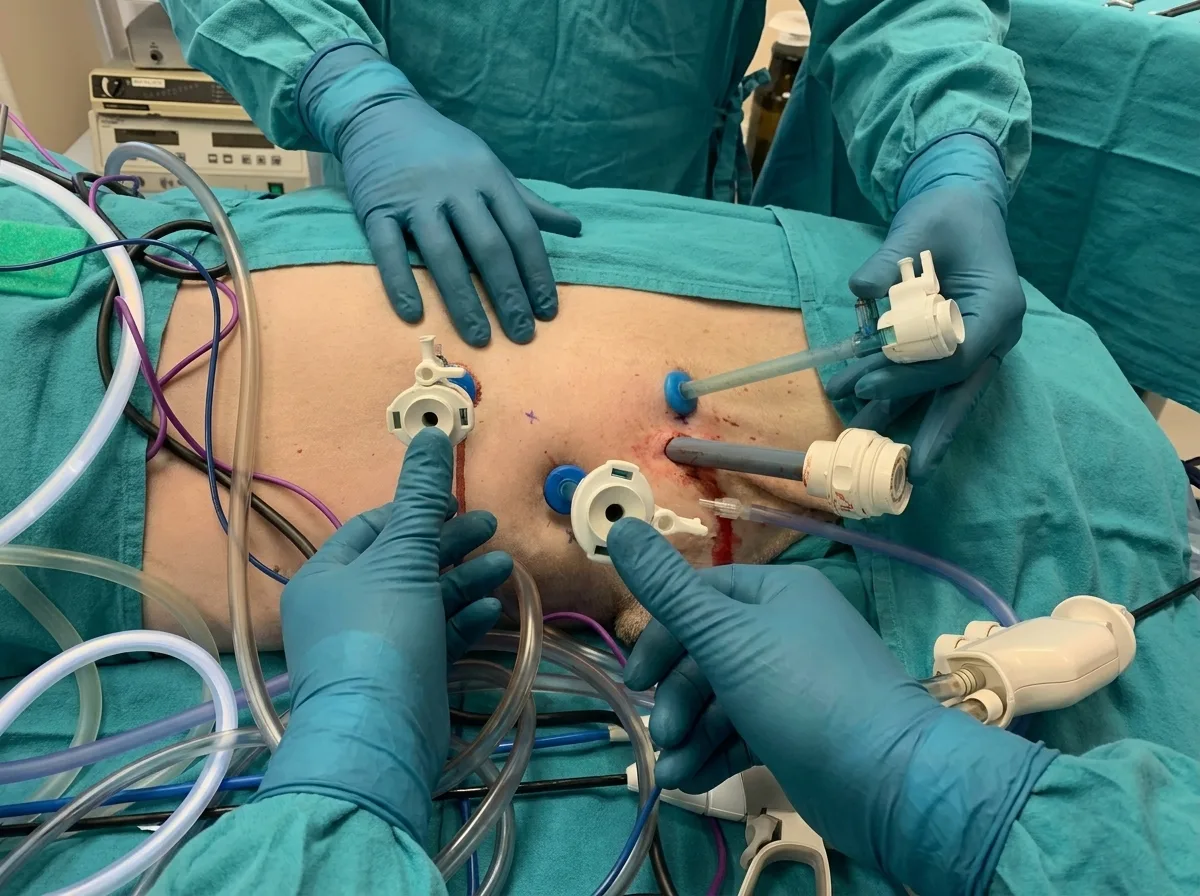
When a patient is told they need an operation on the gallbladder or bile ducts, one of the first questions is: "Will it be keyhole surgery or a big cut?" It is a fair question. The type of surgery affects pain, hospital stay, recovery time, scarring, and sometimes safety.
This article explains the difference between laparoscopic (keyhole) and open surgery for gallbladder and biliary disorders, which conditions suit each approach, the benefits and limitations of both, and why the final decision should always be guided by safety rather than the size of the scar.
What Are Gallbladder and Biliary Disorders?
The gallbladder is a small, pear-shaped organ under the liver that stores bile. Bile is made by the liver and flows through a network of tubes called the bile ducts into the small intestine, where it helps digest fat. Problems in this system are very common, especially in Bangladesh and South Asia. They include:
Gallstones and gallbladder inflammation (cholecystitis)
Common bile duct stones (choledocholithiasis)
Gallbladder polyps
Bile duct strictures, or narrowing
Choledochal cysts, which are abnormal dilatations of the bile duct
Gallbladder cancer and bile duct cancer (cholangiocarcinoma)
Bile duct injury from previous surgery
Each of these may need surgery, and the choice between laparoscopic and open technique depends on the specific condition and the patient.
What Is Laparoscopic Surgery?
Laparoscopic surgery, often called keyhole or minimally invasive surgery, is performed through three or four small cuts, usually between 5 and 12 millimetres long. The abdomen is gently inflated with carbon dioxide gas to create working space. A thin telescope with a high-definition camera, called a laparoscope, shows a magnified view of the organs on a monitor, and the surgeon operates using long, slender instruments.
Laparoscopic cholecystectomy, which is removal of the gallbladder through keyhole surgery, is now the gold-standard treatment for symptomatic gallstones worldwide.
What Is Open Surgery?
Open surgery is performed through a single larger incision, usually under the right rib cage or in the midline of the upper abdomen. The surgeon directly sees and handles the organs. Although less common today for simple gallbladder removal, open surgery remains essential for many complex biliary operations, especially major cancer surgery and difficult reconstructions.
Benefits of Laparoscopic Surgery
Less pain after surgery, so less need for strong painkillers
Shorter hospital stay, often discharge within 1 to 2 days after gallbladder removal
Faster return to normal activities and work, often within 1 to 2 weeks
Smaller scars and better cosmetic results
Lower risk of wound infection and incisional hernia
Magnified, high-definition view, which helps fine dissection
Earlier walking, which reduces the risk of chest infection and blood clots
When Is Open Surgery the Better Choice?
Open surgery is not "old-fashioned". In many situations it is the safer and more effective option:
Gallbladder cancer needing extended removal of liver tissue and lymph nodes
Bile duct cancer (hilar or distal cholangiocarcinoma) requiring complex resection
Complex choledochal cysts in some patients
Repair of major bile duct injuries with hepaticojejunostomy
Severe inflammation or scarring where the anatomy cannot be seen clearly
Multiple previous abdominal operations with dense adhesions
Patients who cannot tolerate gas in the abdomen because of severe heart or lung disease
Comparing the Two Approaches
Pain and Recovery
Laparoscopic patients usually have much less pain and walk within hours. Open surgery patients need more pain relief and typically stay 5 to 7 days or more, with a return to full activity in 4 to 6 weeks.
Scarring
Keyhole surgery leaves a few small marks that fade over time. Open surgery leaves a longer scar, typically 10 to 20 centimetres.
Safety and Effectiveness
For suitable patients with benign disease, laparoscopic surgery is as safe and effective as open surgery. For complex cancer and reconstruction surgery, the open approach often allows more complete removal and more secure connections. The most important factor is not the technique itself but the experience and judgement of the surgeon.
Cost
Laparoscopic surgery may involve higher equipment costs, but the shorter hospital stay and faster return to work often balance the overall expense for the family.
Conversion: When Keyhole Becomes Open
Sometimes a surgeon starts an operation laparoscopically and then decides to switch to open surgery. This is called conversion. It happens in a small percentage of gallbladder operations, more often when there is severe inflammation, bleeding, unclear anatomy, or unexpected findings.
Conversion is not a failure or a complication. It is a sign of good surgical judgement. A safe open operation is always better than a risky keyhole one. Patients should give consent for possible conversion before any laparoscopic procedure.
Bile Duct Injury: Why Expertise Matters
The most feared complication of gallbladder surgery is injury to the main bile duct. Although uncommon, it can cause serious, long-term problems such as leakage, narrowing, recurrent infection, and liver damage. Experienced surgeons use careful techniques, such as clearly identifying the critical structures before cutting anything, to minimise this risk.
When a bile duct injury does occur, it should be managed by a hepatobiliary specialist. Early referral to an expert centre gives the best chance of a successful repair.
The Role of ERCP
Not every bile duct problem needs surgery. ERCP (endoscopic retrograde cholangiopancreatography) is an endoscopic procedure performed through the mouth that can remove bile duct stones or place stents to relieve blockage. Often, a patient with both gallbladder and bile duct stones is treated with ERCP to clear the duct, followed by laparoscopic gallbladder removal. In some centres, both problems are handled during one laparoscopic operation.
Newer Minimally Invasive Options
Surgical technology continues to advance. In selected patients and centres, the following options may be available:
Laparoscopic bile duct exploration: removal of stones from the common bile duct during the same keyhole operation as gallbladder removal, avoiding a separate ERCP.
Single-incision laparoscopic surgery: the operation is performed through one small cut at the navel, for better cosmetic results in suitable patients.
Robotic surgery: the surgeon controls robotic arms that offer more precise movement. It is used for some complex biliary and liver operations, although availability and cost remain limiting factors.
Advanced laparoscopic biliary surgery: in expert hands, some choledochal cyst excisions and bile duct reconstructions can be performed by keyhole technique.
These options are not suitable for everyone. Your surgeon will recommend what is safest for your particular situation.
Special Situations
Elderly Patients
Age alone is not a reason to avoid laparoscopic surgery. In fact, older patients often benefit most from the faster recovery and earlier mobility it offers. Careful assessment of the heart, lungs, and kidneys is essential before surgery.
Patients with Diabetes
People with diabetes are at higher risk of severe gallbladder infection and gangrene. Timely surgery, ideally before complications develop, is especially important. Good blood sugar control before and after surgery reduces the risk of infection.
Pregnancy
Gallstone attacks can occur during pregnancy. When surgery is needed, laparoscopic gallbladder removal can be performed safely, ideally in the second trimester, with close cooperation between the surgeon and the obstetrician.
Incidental Gallbladder Cancer
Occasionally, cancer is discovered in a gallbladder removed for presumed stones. In such cases, a second, more extensive operation may be needed to remove part of the liver and nearby lymph nodes. This should be planned by a hepatobiliary specialist.
Common Myths
"Keyhole surgery is minor surgery." The operation inside is the same; only the access is different. It still needs full anaesthesia and expert care.
"Open surgery means the surgeon is less skilled." Choosing open surgery for complex disease is often the mark of an experienced surgeon.
"After gallbladder removal I cannot eat normally." Most people return to a normal, balanced diet within a few weeks.
"Stones can be dissolved with medicine, so surgery is unnecessary." Medicines rarely work for typical gallstones, and stones often return when they are stopped.
Preparing for Your Surgery
Complete all advised tests, such as ultrasound, blood tests, and MRCP or CT if needed.
Inform your surgeon about all medicines, especially blood thinners and diabetes medicines.
Stop smoking and keep blood sugar and blood pressure under control.
Fast for the time your anaesthetist advises before surgery.
Arrange someone to accompany you home after discharge.
Recovery Tips After Surgery
Start walking as soon as you are allowed.
Begin with light meals and gradually return to your normal diet.
Mild shoulder-tip pain after laparoscopy is common. It is caused by the gas and settles in a day or two.
Avoid heavy lifting for 2 weeks after laparoscopic surgery, and for 6 weeks after open surgery.
Keep wounds clean and dry, and attend follow-up visits.
When to Seek Help After Surgery
Fever, chills, or worsening abdominal pain
Yellowing of the eyes or skin
Persistent vomiting or a swollen abdomen
Redness, swelling, or discharge from the wound
Dark urine or pale stools
Life Without a Gallbladder
Many people worry that living without a gallbladder will harm their health. In reality, the gallbladder only stores bile; it does not make it. After surgery, the liver continues to produce bile, which flows directly into the intestine. In the first few weeks, some people notice bloating or loose stools after very fatty meals. This usually settles with time. Eating smaller meals, adding vegetables and fibre, and reducing fried food all help. Most people live completely normal lives with no long-term problems.
Questions to Ask Your Surgeon
Is laparoscopic surgery suitable for my condition?
What is the chance my operation will need to be converted to open?
How long will I stay in hospital?
When can I return to work and normal activities?
Do I need ERCP before or after surgery?
Conclusion
Laparoscopic surgery has transformed the treatment of gallbladder and many biliary disorders, offering less pain and faster recovery. Open surgery, however, remains vital for complex cancers, difficult anatomy, and bile duct reconstruction. The right approach is the one that is safest for your condition, chosen by an experienced hepatobiliary surgeon after careful assessment.
If you have gallstones, jaundice, or a bile duct problem, a consultation with a hepatobiliary surgeon will help you understand your options clearly.
This article is for general information and does not replace a personal medical consultation. Please discuss your individual treatment plan with your surgeon.